How Sellers are Narrowing the Gap with Buyers in M&A Post-Close Working Capital Adjustments
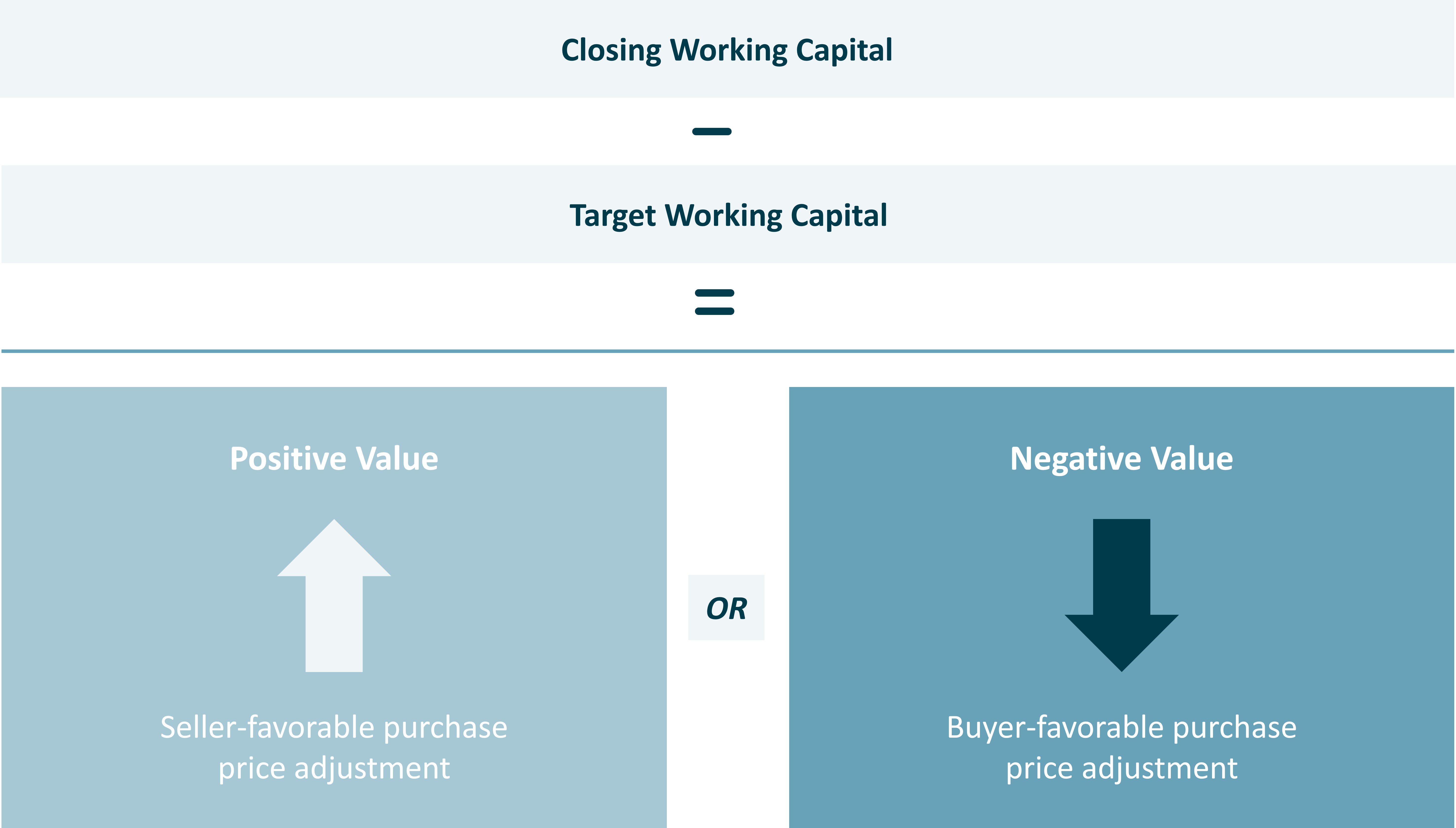
Working capital adjustments to the purchase price are a routine but consequential feature of mergers and acquisitions (M&A) transactions. These adjustments have historically favored buyers, resulting in a reduced purchase price if the working capital at closing is lower than target working capital. Recent trends, however, indicate that sellers are becoming increasingly sophisticated and are leveling the scales.
This article explores why working capital adjustments typically favor buyers, why sellers are closing the gap and how both sides can reduce the risk of disputes. Lincoln International’s team of disputes experts is uniquely positioned to provide comprehensive dispute advisory services by leveraging the firm’s core competencies across M&A industry groups.
Summary
-
Lincoln International explores why working capital adjustments typically favor buyers, why sellers are closing the gap and how both sides can reduce the risk of disputes.
- Sign up to receive Lincoln's perspectives



Why Working Capital Adjustments Favor Buyers
Several structural factors explain why buyers historically prevail more often than sellers on disputed working capital adjustments:
| First-mover advantage: Buyers prepare the initial closing statement, framing key calculations. Sellers are left to identify adjustments and to disprove buyers’ positions. |
| Ambiguous language: Terms such as “GAAP, applied consistently” or “in accordance with past practices” allow broad interpretation. Buyers’ balances in the closing statement may prevail unless sellers have the necessary information to perform an analysis that counters the buyer’s position. |
| Information asymmetry: After closing, buyers control the company’s books and records. To review buyers’ closing statement, sellers must request data through the buyer, often with limited access and tight review periods. If sellers lack robust records of their historical accounting practices, there may be difficulty applying those policies at closing. |
| Timing Constraints: Buyers typically have 90-120 days after closing to prepare a closing statement, and sellers often have a much shorter timeframe (e.g., 30-60 days) to review. |
These dynamics put sellers on the defensive, often forcing them to argue against buyer-prepared positions with fewer tools and less time.
Why Sellers Are Catching Up
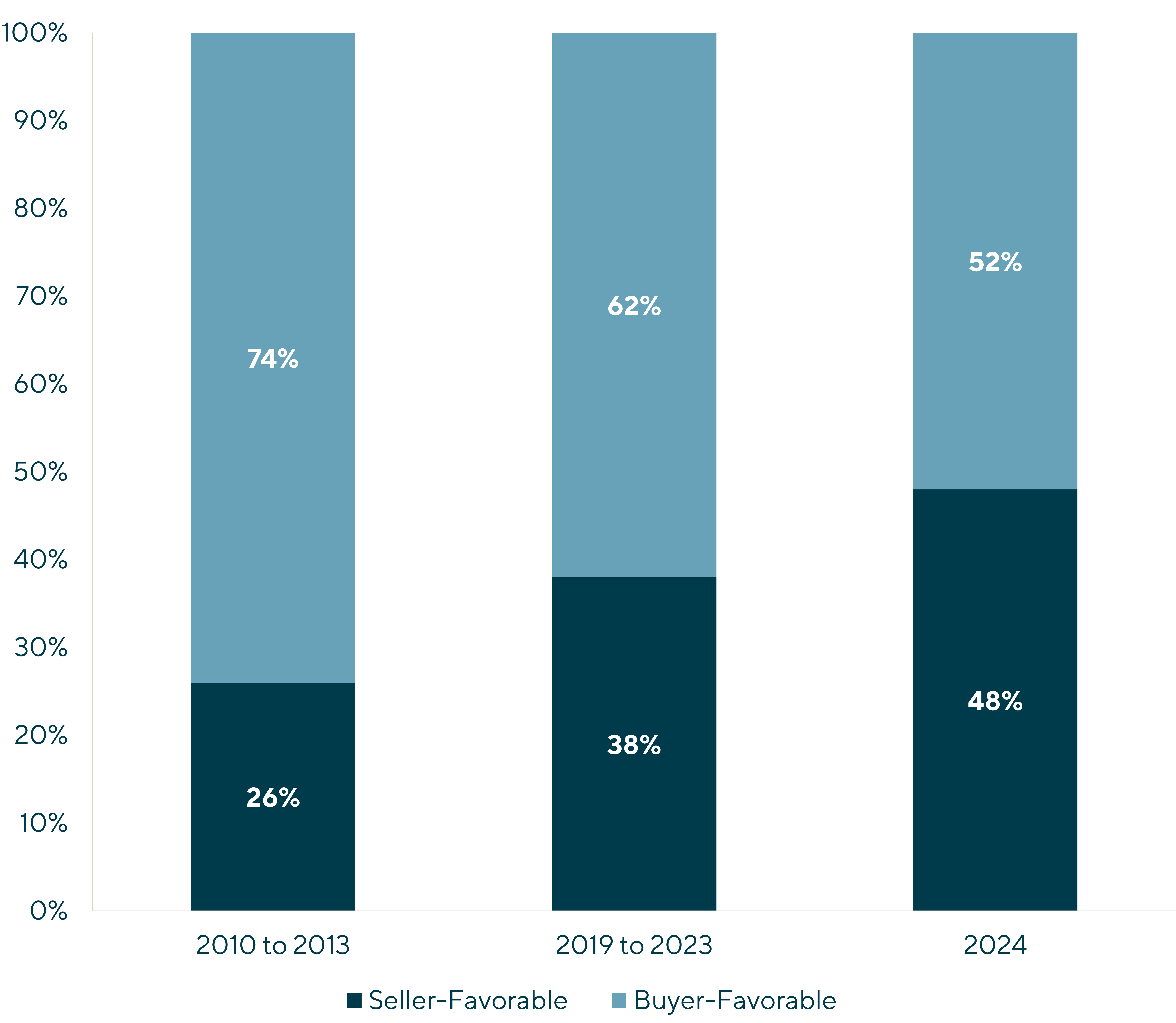
Despite these challenges, the proportion of seller-favorable working capital adjustments has steadily risen from just 26% between 2010 and 2013 to 38% between 2019 and 2023, and to nearly half of all cases by 2024.[1]
The rise in seller-favorable adjustments coincides with increased deal volume between sponsors, as opposed to a sale from a private company to a sponsor, for example. Sponsor-to-sponsor exits totaled $181 billion in 2024, up 141% from 2023, while corporate exits were flat between 2023 and 2024.[2] Repeat private equity sellers can leverage deep experience and seasoned advisors to prepare thoroughly for post-close mechanics. These sellers may press for detailed accounting policies and schedules in the purchase agreement, leaving less room for buyer interpretation.
Additionally, according to Lincoln International, a shrinking pool of top-tier “A+” assets has attracted strong buyer demand and competitive processes in recent quarters, while sales of lower-quality “B / C” assets have been put on hold. [3] This dynamic gives sellers of high-quality businesses greater leverage in negotiations, including in defining purchase price adjustment mechanics. Buyers competing for scarce premium assets are more willing to concede on issues like accounting policies, working capital pegs and post-close access, contributing to the rise in seller-favorable purchase price adjustments.
Buyer- Versus Seller-Favorable M&A Post-Close Working Capital Adjustments Over Time
How Both Parties Can Improve Outcomes
Buyers and sellers each have tools to tilt the balance—or at least reduce the risk of disputes:
Buyers Should: |
|
Both Should: |
|
|
ConclusionWhile buyer-favorable working capital adjustments remain the norm, the margin is shrinking as sellers become more experienced and better prepared. Both sides benefit when purchase agreements avoid vague language, clearly document accounting policies and anticipate subjective areas before closing. Proactive preparation, combined with disciplined drafting, can reduce disputes and foster a fairer balance in the post-closing working capital adjustment process. |
[1] SRS Acquiom Inc., M&A Working Capital Purchase Price Adjustment Study (January 2025)
[2] Bain & Company, Global Private Equity Report 2025 (March 2025)
[3] Lincoln Partners Advisors LLC, Q3 2025 Private Market Webinar: U.S. Edition (August 2025)
Contributors


Related Perspectives
Meet Professionals with Complementary Expertise in Valuations & Opinions



I find immense fulfillment in enabling clients to achieve their objectives and navigate the complexities of today's ever-changing landscape.
Chris Croft
Managing Director & Co-Head of Transaction Opinions
New York

I enjoy sharing private capital market insights and valuation trends with my clients, while also leading a differentiated and high-touch process.
Brian Garfield
Managing Director & Global Head of Portfolio Valuations
New York

I enhance my clients’ decision making and governance processes by providing independent and objective financial advice in a highly responsive manner.
Chris Gregory
Managing Director & Co-Head of Transaction Opinions
New York



I enjoy the opportunity to provide clients with insightful and unbiased advice that will help them make the most informed decisions possible.
Ron Kahn
Managing Director & Global Co-Head of Valuations & Opinions
Chicago