Key Takeaways from WEFTEC 2026
Lincoln’s water & filtration, flow control and infrastructure services teams attended WEFTEC 2026 in New Orleans and observed continued strong investor interest and innovation in the water and wastewater market, highlighted by exhibitors on the conference floor. This year’s conference highlighted a water and wastewater sector undergoing a meaningful transformation. Aging infrastructure and increasingly complex regulatory requirements remain foundational drivers of demand. Conversations throughout the conference reflected a broader transformation in how utilities and industrial customers approach their water systems. Digitalization and artificial intelligence are moving from experimentation toward practical deployment, and water reuse is becoming increasingly important as communities and industrial customers seek to maximize constrained resources. At the same time, workforce shortages and affordability pressures are pushing utilities to operate existing assets more efficiently and increasingly rely on specialized technology and service providers. Together, these long-term drivers have built strong interest in the water and wastewater market in recent years and will continue to drive demand for investment opportunities from strategic acquirers and financial investors alike.
Summary
- Lincoln International shares six themes from WEFTEC 2026 shaping investment and M&A in the water and wastewater market.
- Sign up to receive Lincoln's perspectives


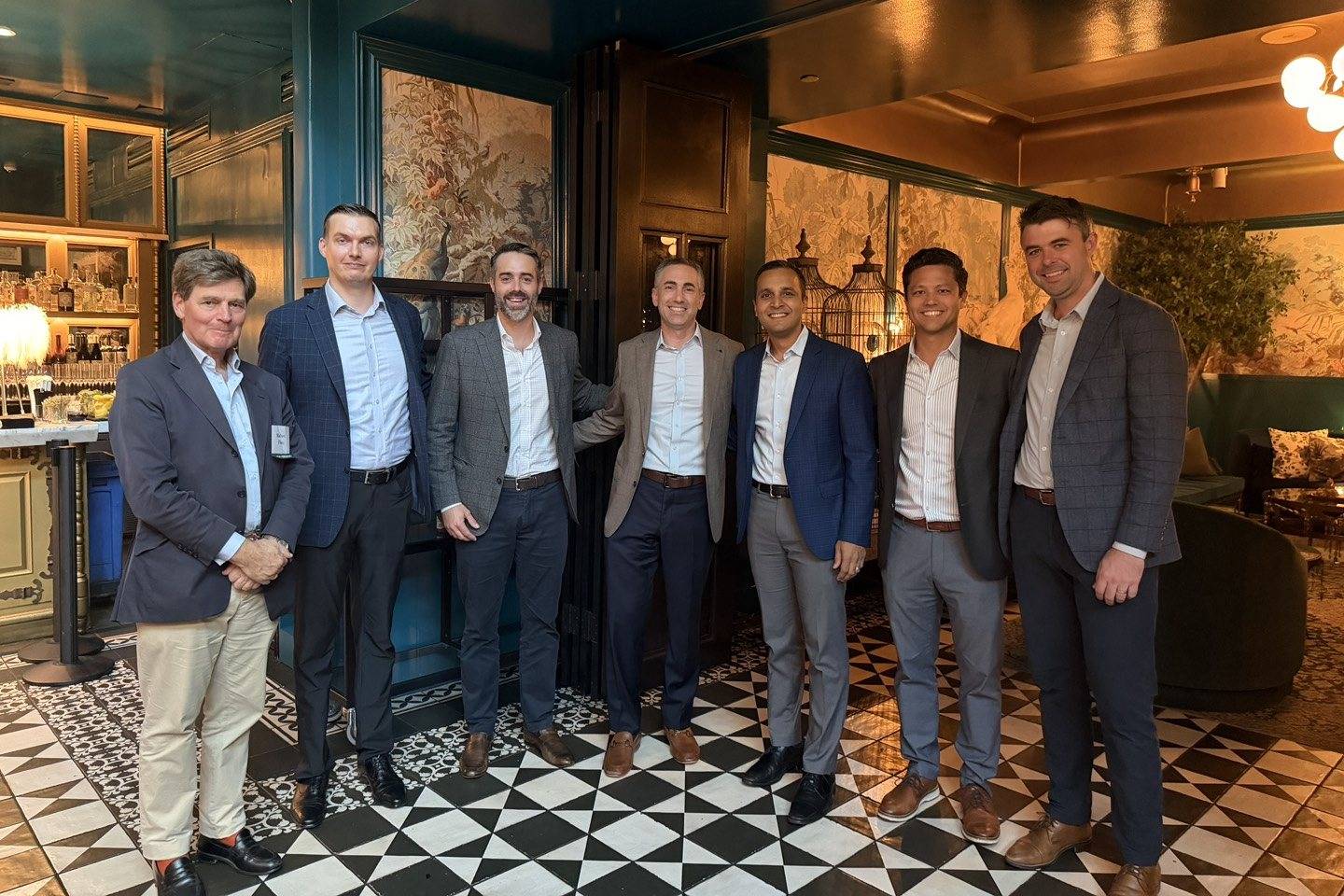
Lincoln’s team at its cocktail reception during WEFTEC 2026 in New Orleans.
Below are key themes Lincoln noted from its conversations with savvy investors, privately held businesses and established operating companies in the water and wastewater market:
-
Infrastructure Renewal & Asset Optimization
The need to repair, rehabilitate and modernize existing infrastructure remains one of the sector’s strongest long-term demand drivers. Aging pipelines, collection systems and treatment facilities require sustained investment, while utilities face rising requirements for reliability, resilience and compliance. Utilities are increasingly focused on extracting greater performance from existing assets through condition assessment, trenchless rehabilitation, process optimization and targeted capital deployment. This has been an active area of mergers and acquisitions (M&A) activity as fragmented equipment manufacturers and regional service providers in these sectors are consolidated by larger players benefiting from scale advantages.
-
Circular Water Economy
Water reuse is shifting from a sustainability initiative to an infrastructure necessity. Population growth, scarcity and industrial development are putting greater pressure on existing supplies while customers seek more resilient and efficient water sources. WEFTEC placed significant emphasis on the circular water economy, including industrial reuse and resource recovery. In conversations with strategics in the sector, it is clear that the technologies supporting reuse and resource recovery have become increasingly relevant to core infrastructure and industrial productivity budgets, rather than merely meeting minimum sustainability requirements.
-
Emerging Contaminants
PFAS have been a prominent theme of WEFTEC in recent years and remained so in 2026. Numerous attending companies focused on PFAS management via rapid testing, on-site destruction, residuals treatment and biosolids destruction. What is clear from conversations with strategics and financial investors alike is that there is no one-size-fits-all solution for dealing with PFAS—the appropriate approach depends on the application (e.g., equipment footprint, water chemistry, PFAS concentration, municipal vs. industrial requirements, etc.). Further, the technology and processes for capturing PFAS are available and proven, but the ultimate winners will be the companies that can deliver economically efficient, scalable methods of both capturing and destroying PFAS across multiple environments.
-
Data Centers Create a New Water Infrastructure Challenge
The AI buildout has made data centers a significant new driver of water and wastewater demand. WEFTEC’s Water-AI Nexus explored both "AI for Water" and "Water for AI," with sessions on cooling, alternative supplies and capacity planning. For utilities, data center development presents both opportunities and complexities, with questions around supply, discharge and stewardship. Data center build-out has created significant opportunities for water-focused companies given the widely publicized cooling water requirements for those facilities. For financial investors evaluating an investment in a water business serving the data center buildout, questions continue to revolve around the sustainability of the target’s earnings and margins, the long-term adoption of its technology approach and comfort with likely customer concentration.
-
Workforce Constraints, Outsourcing & Digital Utility Operations
Utilities are being asked to manage increasingly complex systems with limited internal resources. These pressures are reinforcing demand for specialized third-party providers across inspection, rehabilitation, engineering, monitoring and operations and maintenance (O&M). Technology is also being used to improve workforce productivity and reduce reliance on manual processes. Utilities are moving from broad digitalization toward practical applications including predictive maintenance, digital twins, leak detection and process optimization.
-
M&A Takeaways
Consolidation has been a key theme this year, as numerous private equity-backed companies and privately held businesses have been sold to strategics seeking to consolidate competitors, gain access to a new installed base and cross-sell products. Further, there remains a healthy pipeline of growing assets that are being built into platforms via M&A roll-ups and / or organic growth initiatives with the goal of selling to a larger sponsor or strategic in the coming years. As numerous financial investors evaluate ways to play in the market, many have determined that acquiring a smaller business and building it into a platform is the only approach available without paying a major premium for a more scaled asset. For owners, the attributes most likely to attract premium strategic interest include deep application expertise, a defensible installed base, recurring aftermarket, consumables, software or service revenue and a clear role as either a scalable platform or an important adjacency to a broader portfolio.
Overall Takeaway
Conversations at WEFTEC highlighted a water and wastewater market supported by multiple long-duration tailwinds. Aging infrastructure is driving a sustained cycle of replacement and rehabilitation, while regulation is increasing system complexity and technology is enabling utilities to manage assets more effectively. At the same time, water scarcity, reuse and growing demand from data centers and advanced manufacturing are creating new areas of investment. For companies across the water ecosystem, the opportunity is increasingly centered on helping customers extend asset lives, improve system performance, meet evolving standards and manage water more efficiently. These dynamics continue to support attractive growth opportunities across infrastructure services, treatment, equipment and technology.
Connect with Lincoln
Lincoln International has deep experience across the broader water ecosystem, spanning water, filtration & flow control and infrastructure services. Our coverage includes water and wastewater infrastructure, treatment and filtration, flow control, utility services, maintenance and rehabilitation, environmental services and technology-enabled solutions. We welcome the opportunity to discuss how these trends are shaping strategic priorities, growth opportunities and M&A across the sector.