Sustained Growth in PPE and OHS
| As the effects of the COVID-19 pandemic receded in 2021, so did the demand for personal protective equipment (PPE). A global surge in demand for masks, gloves and shoe covers had driven demand to unsustainable heights. However, pandemic-era PPE made up only a small portion of the sector’s total sales. In industries such as construction, mining and manufacturing, mandatory PPE protects workers from head-to-toe and remains a recurring, non-discretionary purchase. For consumers, Sports Protective Equipment (SPE) protect people of all ages in outdoor activities, sports and daily life. In recent years, strong tailwinds driven by innovation, growth and mergers and acquisitions (M&A) have propelled the sector forward.
With four recent M&A transactions and ~20 portfolio valuations each quarter, Lincoln International is deeply experienced in the global PPE market. Our experts are well-equipped to navigate this dynamic sector, as growing investor demand, regulatory shifts and technological advancements make it increasingly appealing. In this thought leadership piece, our experts analyze industry tailwinds, competitive dynamics and recent valuations, offering actionable strategies to capture growth opportunities. |
Summary
-
Lincoln International’s personal protective equipment (PPE) experts share insights into the growth trends in the PPE sector.
- Click here to download a printable version of this report.
- Sign up to receive Lincoln's perspectives



PPE: Four Key Growth Drivers
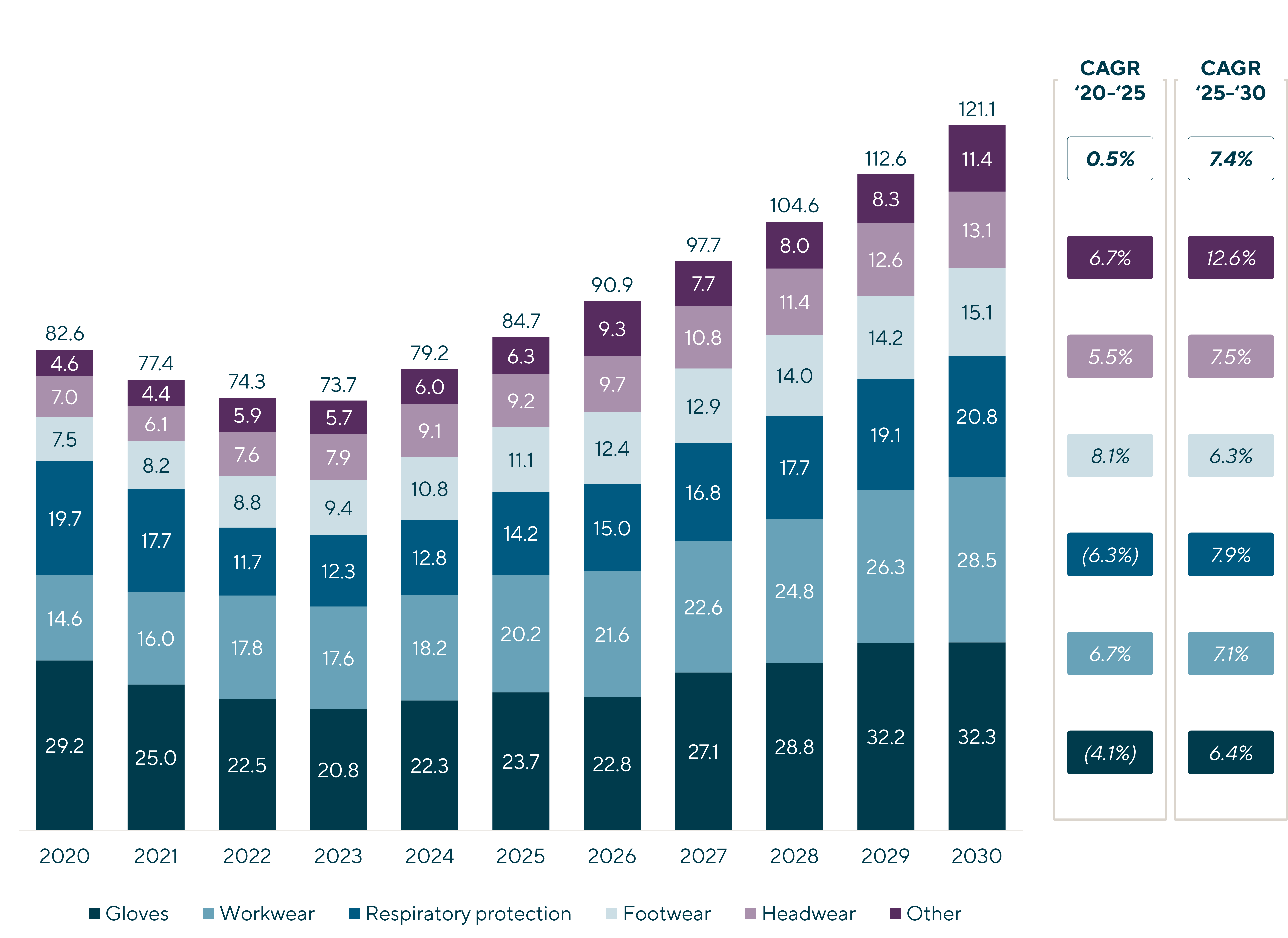
The global PPE market in 2025 is valued at an estimated €84.7 billion, with the largest product segments being hand protection (€23.7 billion) and clothing (€20.2 billion). Despite the sharp decrease in pandemic-related demand, the PPE sector is projected to grow at a 7.4% CAGR between 2025 and 2030, reaching €121.1 billion in market size. This growth is being fueled by the “premiumization and brandization” of PPE products, as well as technology advances and tightening health and safety regulations.
The PPE sector is experiencing transformative growth in demand volume and product prices, but the sector is also evolving due to key growth drivers that offer unique opportunities. To effectively capitalize on emerging trends and enhance strategic positioning, it is crucial to understand the core trends creating avenues for strategic investment and brand enhancement.
|
1 |
|
Premiumization of PPE
Manufacturers and buyers across end markets are increasingly emphasizing personalization, comfort and performance in PPE. Exceptional products offer high quality and functionality, successfully combined with a sports-inspired and innovative design. Customized PPE enhances protection, utility, and employee satisfaction, translating into higher return on investment (ROI) for safety measures. For example, tighter-fitting respiratory protection or prescription safety glasses improve both comfort and compliance. Beyond practical benefits, studies indicate that investments in occupational health and safety (OHS) yield positive financial returns and additional indirect benefits to employee retention and morale, as well as production quality and corporation reputation. Amid the ongoing “war for talent,” particularly in blue collar roles, premium PPE products have become a tangible demonstration of employees’ value. |
|
2 |
|
Brandization of Products
Employers are increasingly integrating both fashion elements and branding elements into PPE, and industry reports indicate branded products help workers identify with their job and company. Esteemed and attractive products, especially those promoting a respected employer, are more likely to be worn by employees outside the workplace, enhancing brand awareness and employee identity. A prime example of successful PPE branding is FIGS, a consumer brand specializing in scrubs for healthcare workers. The brand’s design and distribution has disrupted the healthcare PPE market, offering functional solutions coupled with a promise to help buyers “feel good, look good and perform at [their] best.” |
|
3 |
|
Technology Driving Gains
In high-tech industries, increased automation and output growth is driving evolving safety requirements. PPE manufacturers are collaborating with customers to develop high-quality PPE, tailored to changing workplaces and regulations. Accelerated developments and advancements, both in high-tech industries and PPE manufacturing, are additionally improving the value add and value proposition of PPE. One development revolutionizing the PPE sector is AI integration, which has transformed PPE from reactive protection to proactive incident prevention. Manufacturers are now tasked with developing software and hardware capabilities that enable Internet of Things (IoT) compatibility, allowing PPE to integrate seamlessly with customer systems. Beyond technology integrations, advances in materials technology create additional value-add for buyers. Across various end markets, innovations in anti-cut, fire resistant and high-visibility fabrics have improved worker safety while increasing stickiness. |
|
4 |
|
Shifting Industry Standards
Safety standards and regulations have become increasingly stringent across regional markets, significantly impacting small and medium enterprises (SMEs) in developing nations. Global efforts to strengthen national OSH systems have resulted in widespread policy changes, driving increased worker safety and heightened global demand for PPE. In addition to a rise in initial purchases, changing worker trends toward more frequent PPE replacement also has led to increased repeatability of purchases. Beyond increasing demand for PPE, global standards are continually being raised as innovations create new levels of safety offered by equipment (and new levels of danger presented in workplaces). The requirements to receive approval from regulatory bodies are strict, creating market barriers to entry and expanding both usage demands and performance requirements. Manufacturers and developers have a strong drive to continuously innovate to meet evolving regulatory and industry needs. While performance and regulatory standards drive innovation trends, a growing emphasis on sustainability and environmental, social and governance (ESG) standards has shifted PPE manufacturer sourcing to eco-friendly products, sustainable packaging and certified manufacturers. A large push for renewable and recycled materials has driven both consumer interest and higher product prices. |


Competitive Dynamics in the PPE Market
A shifting supply chain, global innovations and changing standards are leading to a disruption in the competitive dynamics of the PPE market.
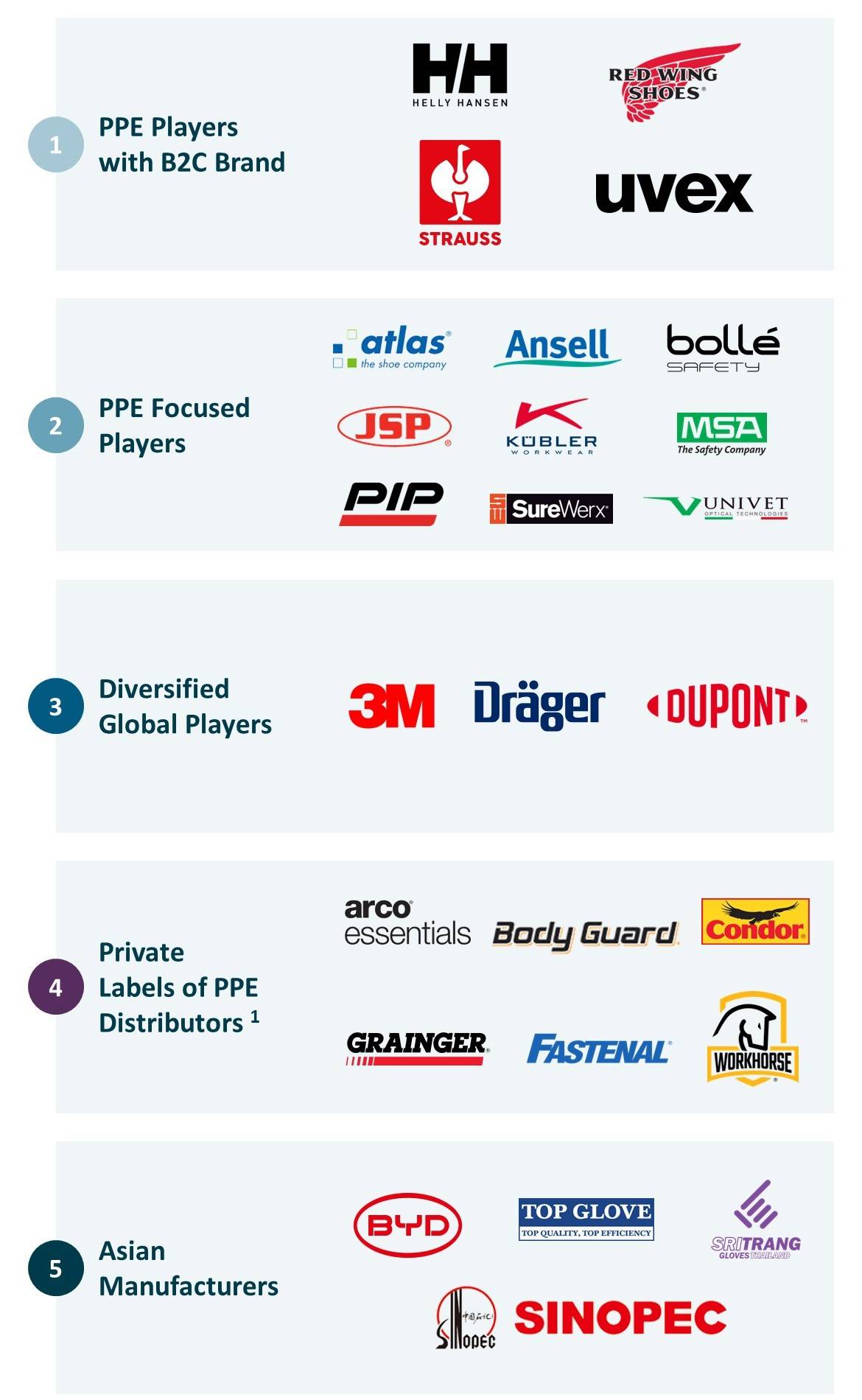
Historically strong performers in the budget segment (including B2C PPE distributers, multi-sector players with a PPE focus and diversified global players active in the PPE market) are all expected to experience a moderate loss of market share to Asian manufacturers and private label brands due to disruptions caused by shifting supply chains, global innovations and evolving standards in the PPE market.
In the premium and high-end segments, however, the same players are largely expected to grow in global market share. Customers are increasingly gravitating to strong B2C brands in the commoditized market with a rich history, strong track record and associated emotional impact. Beyond strong branding, however, PPE-focused players that innovate leading products are recognized as leaders in specific segments, driving growth and inspiring imitation.
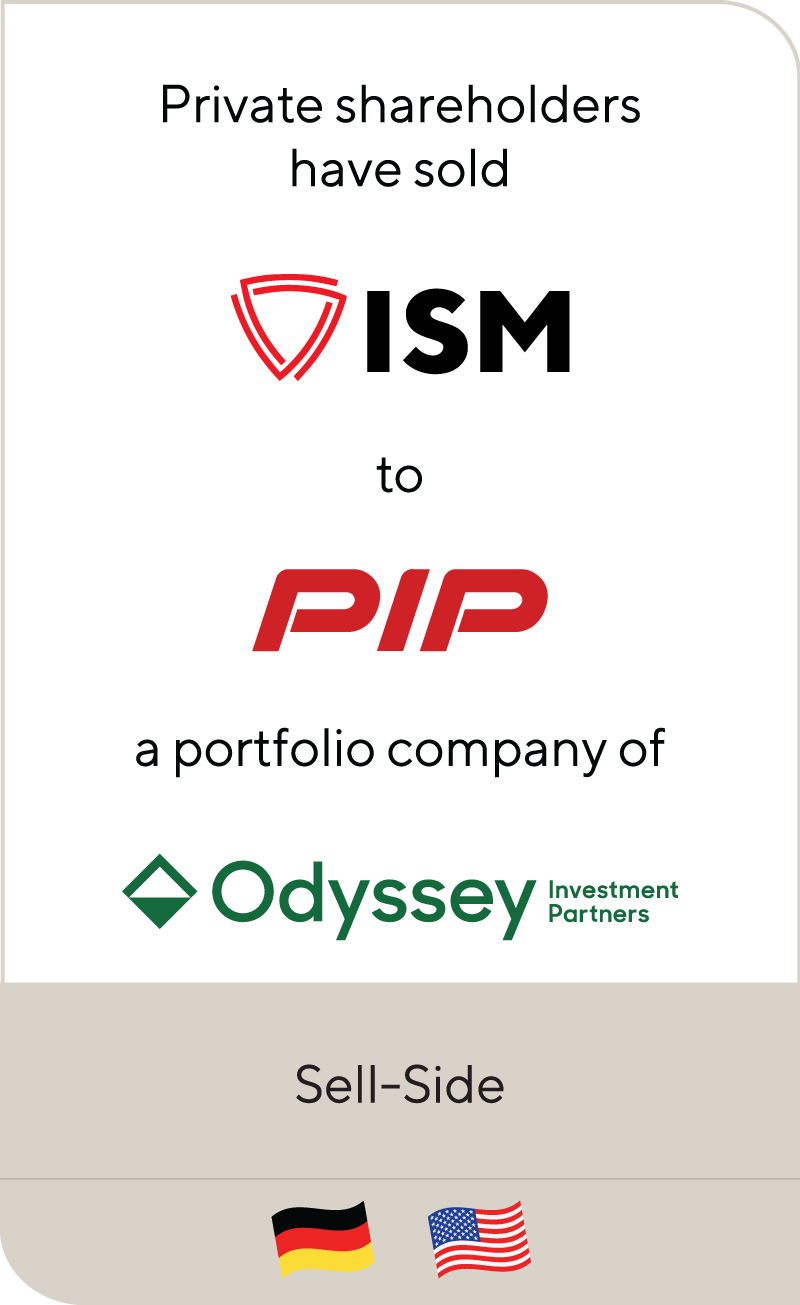
Across the industry, sustained consolidation dynamics reflect the sector’s highly active and global nature. International and cross-border transactions are increasingly common among both adjacent and vertical transactions. In 2023, following Lincoln’s successful sell-side advisory, PIP Global Safety was acquired by Odyssey Investment Partners. Since then, PIP has successfully expanded its global platform and product offerings through European and Oceania acquisitions, increasing its revenue by more than $1 billion from 2022 to 2025.
The race to acquire high-quality PPE assets continues between strategic buyers and private equity firms. Although private equity firms were more likely to approach and express interest in PPE assets in Lincoln’s observed transactions, strategics were twice as likely to be the final buyer. This high rate of purchase indicates a clear strategy and strategics acquirers’ commitment to purchasing compelling PPE investment opportunities.
Looking Ahead with LincolnIn 2025, PPE manufacturers are projected to exhibit an average EBITDA margin of more than 15%. The average market transaction has recently traded at multiples higher than 10x, with Lincoln’s mandates achieving a significant premium compared to the average. Based on a database of 6,250+ quarterly valuations of private companies, Lincoln’s analysis of credit market cycles suggests that when valuation environments finish stabilizing, sector multiples are expected to remain steady near 10x. Players who effectively harness growth trends will benefit from rising demand and pricing, making them highly attractive to investors. Lincoln International’s M&A team offers robust expertise in navigating this dynamic sector. Contact us to discuss how our valuation and advisory services can help your business capitalize on the growing opportunities in the PPE market. |
Related Transactions

Contributors



Related Perspectives
in Consumer