

Market Growth in OHS: M&A and Valuations in Occupational Health and Safety
Investing in occupational health and safety (OHS) is not just a regulatory requirement in Europe; it is a strategic advantage. For every Euro invested, employers can expect nearly double the return, underscoring the critical role of OHS in fostering a productive workforce and sustainable economy. In 2019, the societal cost of work-related injuries and illnesses exceeded €3,000 billion, with fatal cases accounting for 55% of this staggering figure. Over the past three decades, advancements in OHS have led to a remarkable 70% reduction in fatal accidents, bringing the rate down to fewer than 1.5 fatal cases per 100,000 employees. Still, as workplaces evolve, new challenges and risks necessitate innovative and integrated solutions beyond mandatory OHS solutions, creating growth opportunities for outsourced service providers and providing value-added solutions to corporates and their workforce.
The growth trajectory of OHS is driven by five key trends in Europe, analyzed below by Lincoln International’s experts using proprietary industry data and deep sector expertise. With a successful track record of completing numerous deals in the OHS sector, Lincoln International’s team is uniquely positioned to guide owners and sponsors in capturing growth opportunities by leveraging these trends based on an unrivalled sector expertise.
Summary
- Lincoln International's occupational health and safety (OHS) share insights into the growth of the OHS market
- Click here to download a printable version of this perspective.
- Sign up to receive Lincoln's perspectives


OHS Growth Drivers
Europe’s OHS market is expanding steadily, with the five largest national markets together worth roughly €11 billion in 2024. Germany is the heavyweight at roughly €5 billion, while the Netherlands, Italy, Spain and the U.K. each fall between ~€1.5 and €2.0 billion. Looking ahead to 2025–2030, growth across Europe is expected to remain stable and broadly in the mid to single digits.
Snapshot of Selected European Markets
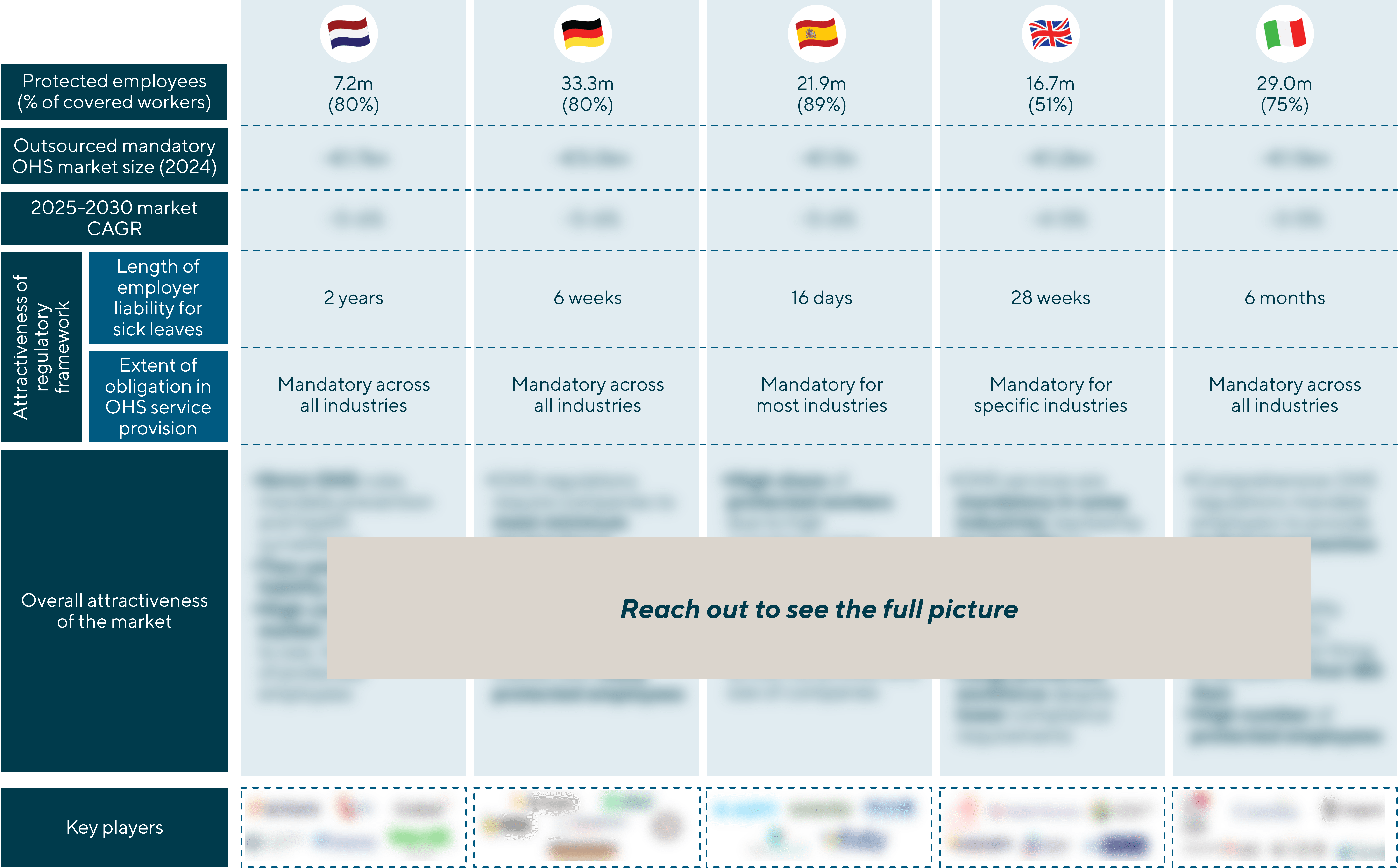
Overall, the market combines stable, regulation-led baseline demand with consistent, mid-single-digit growth, positioning European OHS as a resilient health-services segment through the decade, driven primarily by the following factors:
|
Driver 1 |
Employed workforce and available OHS personnel
In the 27 EU member states, a legal framework of regulations and guidelines covers roughly 220 million workers. As macroeconomic forces like immigration and lower unemployment rates, as well as the trend toward more second- and part time jobs, increases workforce numbers across Europe, the demand for tailored OHS solutions grows. Specific worker demographics such as aging employees face unique workplace risks, increasing their likelihood of accidents. Additionally, workers in high-risk, low-skill jobs are more prone to workplace hazards, necessitating targeted prevention and health interventions. Despite the growing workforce, the number of OHS professionals remains stable yet below market demand. This imbalance presents an opportunity for OHS suppliers to capitalize on increased demand and higher service volumes, leading to improving margins and stable revenue streams. As the workforce evolves, OHS providers must adapt to meet the diverse needs of expanding worker groups, ensuring safety, health and wellbeing of workers across all sectors. |
|
Driver 2 |
Demand for company-specific services
Europe’s ongoing transition from an industrial to a service-based economy mirrors the shift seen during the Industrial Revolution, which moved workers from agricultural to manufacturing roles. This modern transformation has profound implications for OHS, necessitating a reevaluation of service demands. Two key changes are shaping the OHS landscape:
As Europe’s economy grows, OHS providers must innovate to protect workers’ wellbeing, ensuring that institutional and customized solutions evolve with changing employment dynamics to offer value-added services for clients. |
|
Driver 3 |
Technology
As technology continues to shape end markets, OHS providers must adapt their offerings to meet the evolving needs of employees, ensuring safety and wellbeing in both remote and physical work environments. |
|
Driver 4 |
Regulatory environment
The European Union has established a comprehensive legal framework for OHS regulations over the years, adapting to new challenges and safeguarding workers across diverse industries. Regulatory requirements vary significantly by geography, with Germany recognized for its comparatively extensive regulations. France, the Netherlands and Belgium also impose comprehensive legal demands on OHS practices. Meanwhile, the Nordic countries prioritize value alongside compulsory OHS regulations, particularly in services addressing mental health. Service providers must remain vigilant to changes in local frameworks as ongoing regulatory efforts continue to evolve. Understanding these geographic nuances is crucial for providers to effectively navigate the regulatory landscape and ensure compliance while delivering high-quality OHS services. |
|
Driver 5 |
Consolidation Opportunities
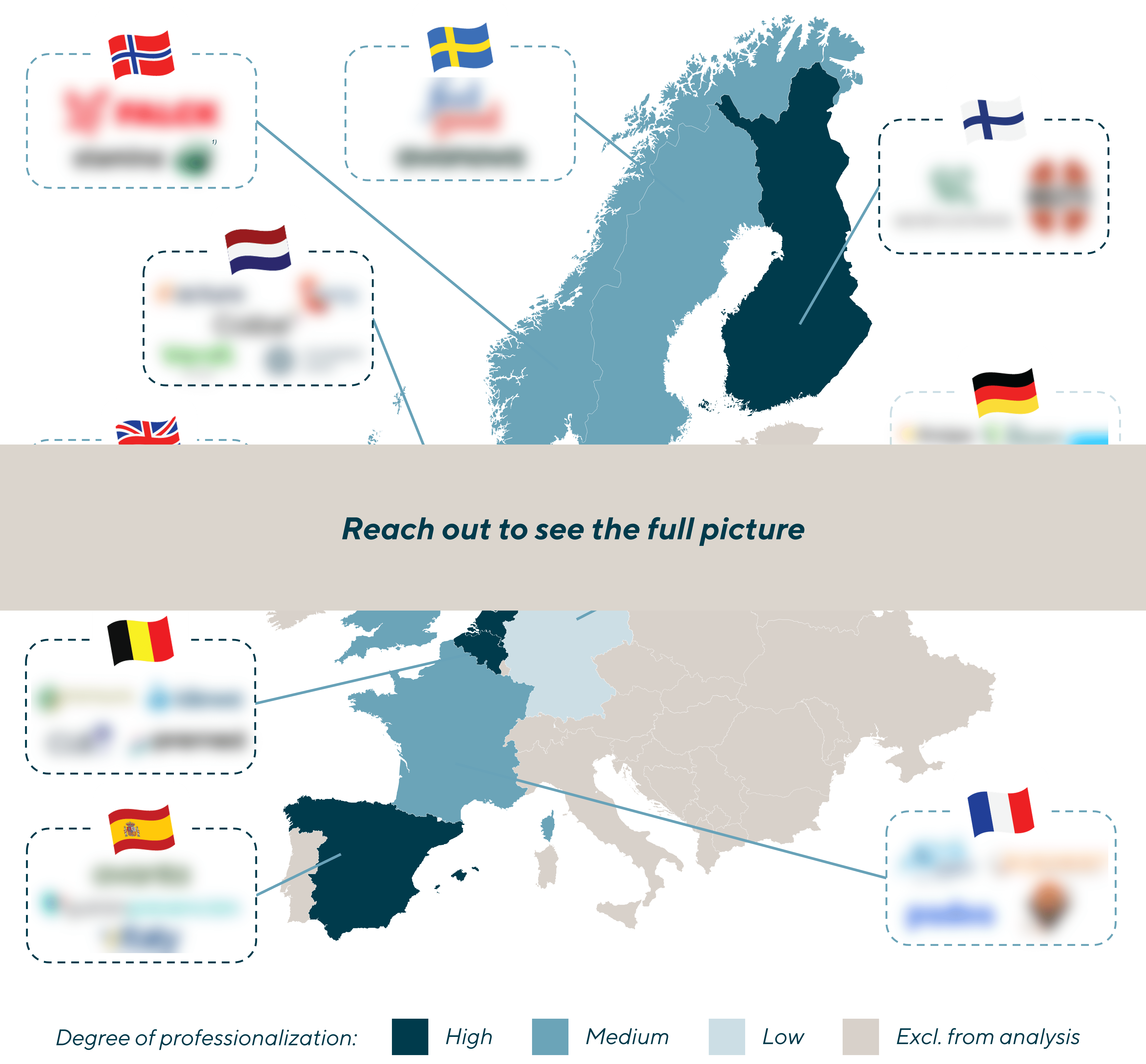
Europe’s OHS landscape shows the highest professionalization in Northern and parts of Western Europe where service standards and operating models are more mature. Fragmentation, however, varies sharply by country: Germany, the U.K. and Italy remain highly fragmented with many small providers, while Spain and the Netherlands show meaningfully higher consolidation. Degree of Professionalism by Country
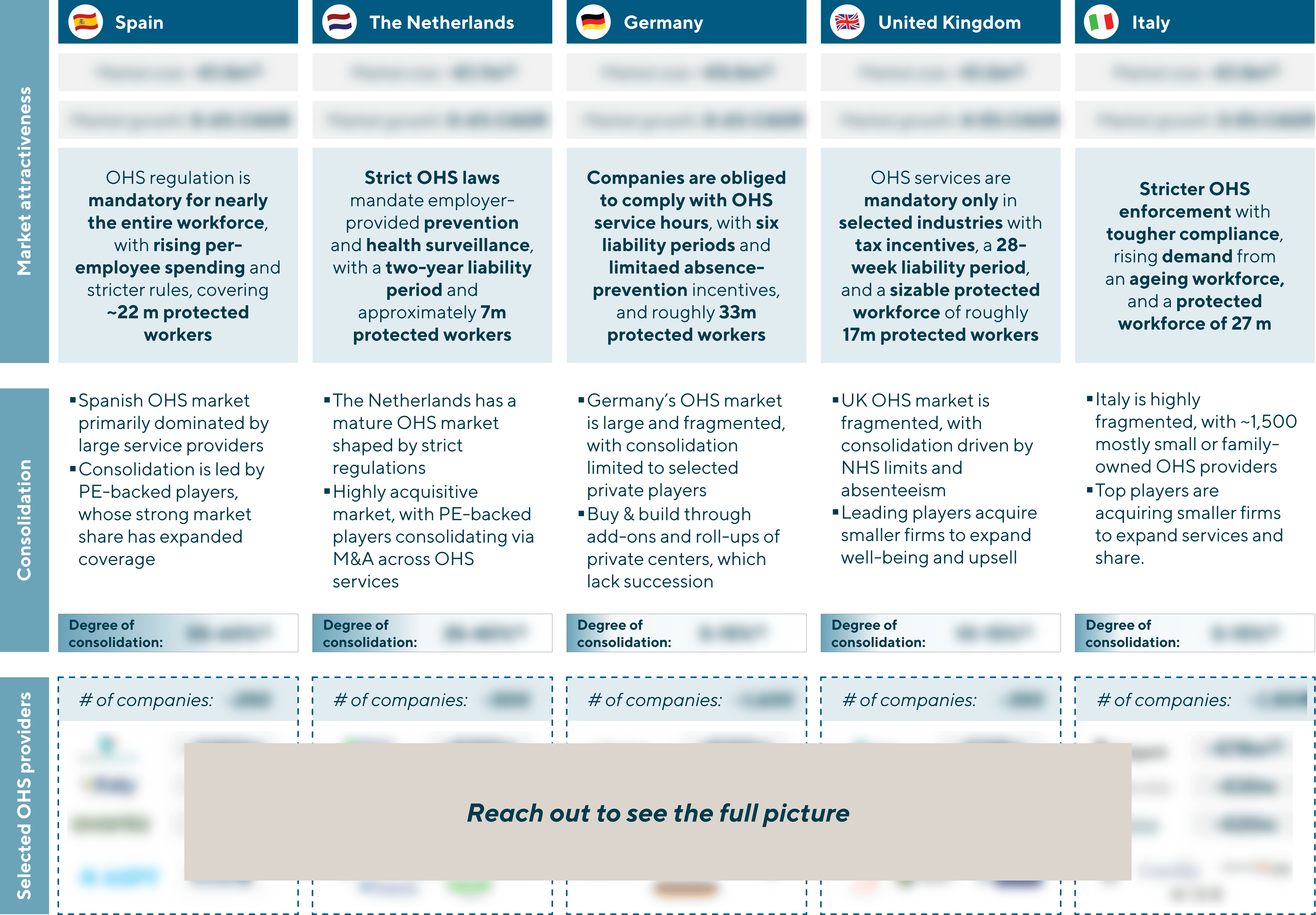
Consolidation momentum is building across the continent as investors target scale benefits, national coverage and broader service portfolios. Spain already displays advanced consolidation, reflecting a large protected workforce and rising spend per employee. The Netherlands sits mid-pack: Regulation is strict, professional standards are high and the market has been steadily consolidating. Germany’s large market remains the most fragmented, with many physician-owned centers and regional providers creating ample roll-up opportunities. The U.K. is also fragmented, with demand influenced by absence trends and mixed public–private purchasing dynamics, leaving room for platform expansion. Italy’s fragmentation persists despite tougher enforcement since 2023, offering scope for tuck-ins and regional build-outs. Overall, the most attractive markets combine robust regulation, sizeable protected worker bases and clear room for consolidation—conditions that support stable demand today and value creation through scale over the coming years. Consolidation Opportunities by Geography
Strategic acquirers and sponsors are expected to continue pursuing attractive assets across European geographies, driving further consolidation in the OHS sector. Understanding the regional nuances and market dynamics is essential for stakeholders looking to capitalize on these consolidation opportunities. |
OHS Valuations Trends
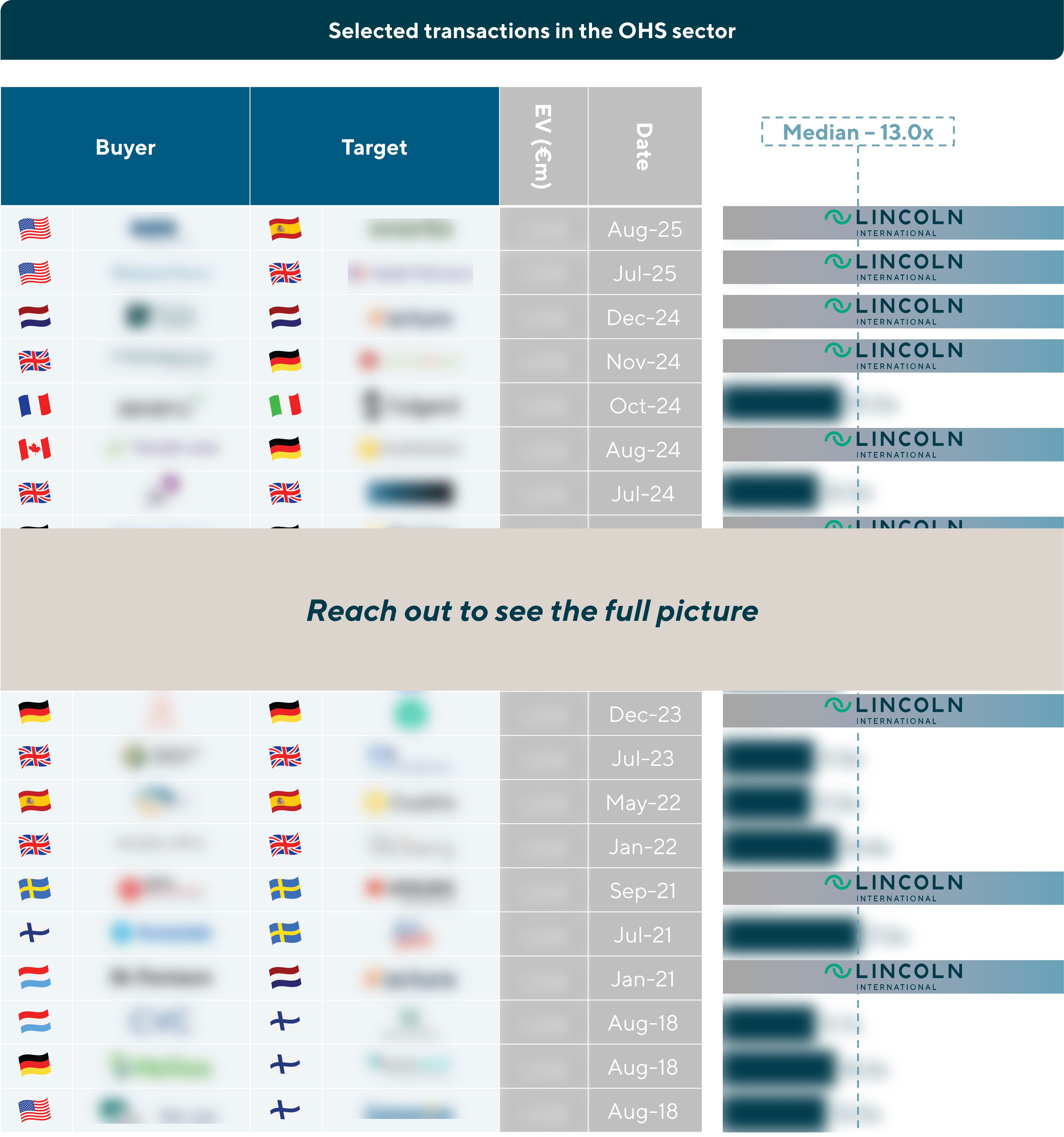
Given historical trading levels of comparable companies and strong momentum in the European OHS market, valuations are likely to remain robust in the coming quarters. This momentum, together with sustained private-equity interest in a highly regulated sector, is evident in past OHS deals, which have typically priced above listed peers. Supported by powerful megatrends, regulatory enforcement, demographics, digitization and consolidation in a still-fragmented market, plus multiple growth avenues, OHS should remain a priority for investors, translating into stable, attractive valuation levels. Understanding these valuation dynamics is crucial for stakeholders aiming to make informed investment decisions and capitalize on the growth potential within the OHS sector.
Looking Ahead with LincolnAs the OHS sector continues to experience strong deal momentum and evolving industry trends, outsourced service providers are positioned as attractive assets for both private equity and strategic buyers. Lincoln International’s team of cross-border healthcare experts is adept at guiding European providers through the full credit cycle, from raising capital to identifying opportunities and executing a well-structured sale process. The dynamic landscape of OHS presents numerous opportunities for growth and consolidation, driven by technological advancements, regulatory changes and shifting workforce dynamics. By leveraging Lincoln’s expertise, providers can navigate these complexities and maximize their strategic potential. Reach out to Lincoln International today to explore how our team can support your organization and portfolio in capturing these growth opportunities and achieving sustainable success in the OHS sector. |
Contributors




Related Transactions







Related Perspectives
in Healthcare