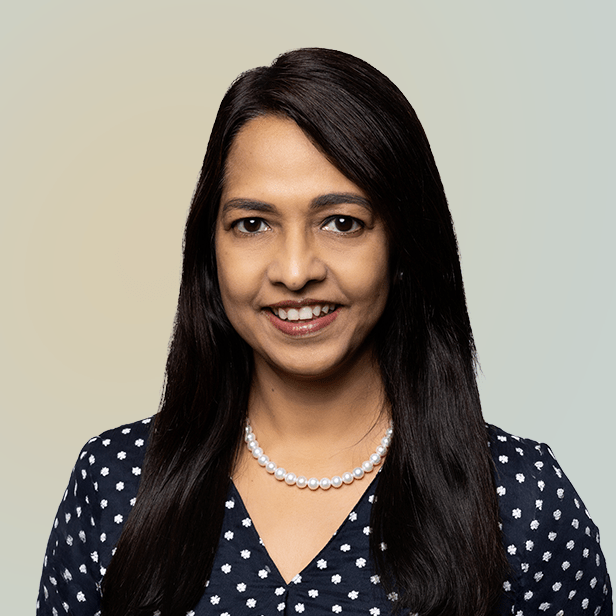
Middle East Growth Trajectory—Governance, Global Standards and Valuation Best Practices
| Srividya Gopal, Managing Director and leader of Lincoln’s Middle East practice, recently shared her perspective on the rapid growth and evolution of private capital in the Middle East in a candid conversation with the International Valuation Standards Council. Highlights of her conversation are below. |
Summary
-
Lincoln’s private capital market experts analyze recent growth trends in the Middle East region.
- Sign up to receive Lincoln's perspectives



1 |
Over the last three decades, you have worked in the transaction & valuation industry in South Asia, Southeast Asia and the Middle East. How have the regions compared to each other throughout this time frame?India’s domestic economy witnessed a significant shift in the 1990s from traditional industries to new economic sectors, with considerable growth in technology, healthcare and renewable energy. With rapid globalization during that period, several Indian companies not only catered to international markets but also raised capital through global private investors or stock exchanges. This required them to adopt some global valuation (e.g., PEIGG[1], IPEV[2]) and accounting standards (e.g., U.S. GAAP, IFRS). Singapore and Southeast Asia witnessed a similar trajectory in the early-to-mid-2010s when the region increased its focus on technology-enabled, internet-based and digital asset-led sectors. There was a significant surge in consumer demand and dedicated private capital fund assets for the region, as well as global public offerings. There was a strong adoption of global standards, as most of the countries in the region follow IFRS, and bodies like the Institute of Valuers & Appraisers of Singapore (IVAS) made it compulsory for practitioners to follow International Valuation Standards (IVS). The Middle East is on the cusp of a disruptive technology breakthrough but at a different level altogether. The focus is not on traditional technology but on artificial intelligence (AI), data centers, cloud, advanced computing, robotics, smart cities, tokenization, blockchain innovation and more, with a plan to harness these technologies across each of the region’s industries. This critical transformation is supported by various regulations and regulatory frameworks, which are fairly advanced compared to most parts of the world. |
|
2 |
You were involved with the valuation profession and its advancement in Singapore and Southeast Asia for nearly 15 years. How does the evolution of the valuation profession in the Middle East compare to these other regions, and what is driving this progression?The valuation profession has been around in Singapore for decades, but it got a significant impetus when IVAS was set up in 2016 through an industry-led, government-supported initiative under the auspices of the Ministry of Finance. It has undertaken a variety of initiatives, including registering valuers across many countries; developing a curriculum, continuous education programs and practice guides; and constructing mechanisms for disciplinary action. The Southeast Asian economy saw a rapid increase in mergers and acquisitions (M&A) transactions as well as private equity and venture capital investments in the last decade. The foundation IVAS laid has significantly helped professionals and stakeholders address this massive need for valuations, along with a focus on governance and independence. The Middle East, especially the GCC countries and others in the Middle East North Africa (MENA) region, is at a stage of rapid business and economic development that has led to a substantial increase in private capital investments and M&A transactions. This certainly increases the focus on independent, transparent valuations and adherence to global best practices and standards. |
|
3 |
The Middle East, particularly the GCC, is witnessing significant growth in private capital investments and M&A. What have been the key reasons behind this acceleration, and what are the key trends you are seeing in the transaction landscape?Global capital markets are witnessing significant volatility and facing challenges caused by geopolitical uncertainties, trade wars and technology disruptions. Hence, investors are looking for more stable market environments to either invest into or to manage their investments that can not only provide them returns but also diversification and resilience. An increasing number of investors are seeking efficient financial hubs that can manage and grow their capital, offer lower risks and provide a regulatory-, tax- and residency-friendly jurisdiction. The UAE ticks all the boxes, with a highly business-focused and business-friendly environment that additionally emphasize on governance and regulations. The results are evident to see. In 2025, Middle East M&A value crossed $100 billion and grew at over 100% year-over-year, making it one of the fastest-growing regions globally. Outbound M&A and investments from GCC investors rose sharply, with domestic investors deploying capital at scale in North America and Europe. The momentum was supported by strong levels of sovereign wealth fund (SWF) capital and the government’s proactive investment agendas. |
|
4 |
What are the key opportunities and challenges you see for global valuation professionals in this region? How do you see the adoption of global standards and best practices unfolding in the Middle East?There is significant capital available and being deployed by SWFs within the GCC, with estimated assets under management of over $5 trillion. There is an increased emphasis on governance, transparency, independence and adherence to global best practices. The M&A market is growing rapidly, especially for cross-border acquisitions. There is a venture capital boom and a rapid emergence of unicorns. We also see an increase in private credit investments yet an underdeveloped market for private credit valuations. As the private investment volume grows, there will need to be wider exit options, including secondary transactions and continuation funds that also require independent transaction opinions or valuations. These trends are driving the market from a broader, deal-based professional services market to one that demands deeper and specialized skills, experiences and expertise around valuations and other areas. This must start with improved knowledge and usage of IVS and other global guidance and best practices. This is an excellent opportunity for global valuation professionals, as well as standard-setters, to bridge this gap and bring these practices to market. |
5 |
Some of the areas the IVSC board discusses often are technology and intangibles. Do you see these as high-growth areas in the Middle East?Intangibles and intellectual property (IP) are key topics of discussion for our IVSC boards. While we look at current topics like AI, ESG impact, complex capital structures and more, our evergreen topic is intangibles given it is also a critical part of a business. In addition to covering this in its standards, the IVS has written 6 perspective papers covering human capital, brand, technology, data, customer assets and a broad overview of the growing importance of intangibles. The topics of both technology and intangibles / IP are extremely relevant for the Middle East and GCC as the region moves from a traditional industry focus to a new-age, IP-led and tech-enabled rapid growth trajectory. There needs to be a push for greater focus on these asset classes from investment, transaction, tax-planning, financial reporting and financing perspectives. |
|
6 |
What is Lincoln’s plan for its Valuation & Opinions Group in the Middle East?Lincoln International officially established an office in the UAE last year, registered with the Dubai International Financial Centre, to cover the Middle East region. Our aim is to bring our deep expertise in valuing sophisticated businesses, private capital investments, complex instruments, cross-border transactions and more to this region, which is witnessing rapid changes and growth. Lincoln’s global platform works with a few hundred global investors and corporates to provide over 25,000 valuations annually, giving our advisory professionals access to massive amounts of private capital markets data. Earlier this year, we officially launched the S&P Lincoln Senior Debt Index Series in strategic collaboration with S&P Dow Jones Indices to further address the critical need for transparent, independently calculated benchmarks in the private capital markets. All of these insights and data are critical for LPs in the Middle East and beyond. We strive to be a thought leader in this market and support clients with higher-quality, deeper technical skills, as well as creating more awareness for valuation standards and best practices, with an aim to support the valuation profession and users of valuation services with Lincoln’s data-driven approach. |
|
7 |
How do you see current geopolitical events impacting the GCC and UAE markets in the near and long term?The current geopolitical environment has introduced a degree of uncertainty across global markets, with potential implications for capital flows, supply chains and investor sentiment. GCC nations, given the region’s geographic position and integration with global markets, are closely monitoring these developments. More than ever, there is an increased need (both regional and global) for robust valuation frameworks that appropriately incorporate macroeconomic conditions, risk factors and evolving market dynamics into investment and strategic decision-making. |
Looking Ahead with LincolnWith the rapid changes, growth and development seen in this market, it is critical to ensure the right balance of business friendliness and governance, of high growth and regulations and of high returns and right risk management. Deep valuation skills and adoption of international standards, as well as global best practices, would go a long way in bringing about this balance. |
1) Private Equity Industry Guidelines Group
2) International Private Equity & Venture Capital Valuation Guidelines