Handelszeitung | Mergers & Acquisitions in Times of Political and Technological Uncertainty
| Originally published by The Handelszeitung on January 29, 2026.
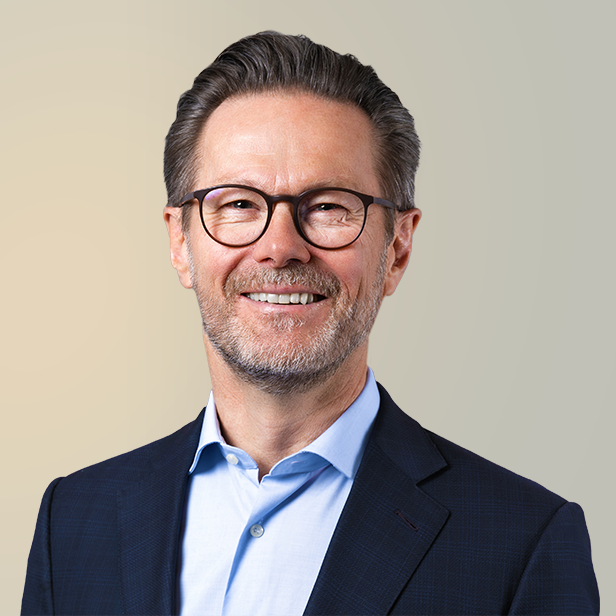
After years of sluggish growth following the COVID-19 pandemic, Swiss dealmakers have almost gotten used to the continued cadence of major market shocks. Now, in 2026, Lincoln expects quiet momentum to grow into a strong transaction market, opening opportunities for leaders. For more than 30 years, Øyvind Bjordal, Head of Switzerland and Managing Director at Lincoln International, has worked in M&A and corporate finance advisory, 11 of which have been spent at Lincoln. He recently spoke with Handelszeitung, where he shared his 2026 outlook and Lincoln’s broader perspectives on the market. |
Summary
- In 2026, Lincoln expects quiet momentum to grow into a strong transaction market in Switzerland, the DACH region and beyond.
- Sign up to receive Lincoln's perspectives


| Q: Mr. Bjordal, why could 2026 become an exciting year for M&A?
Øyvind: Since the end of the COVID-19 pandemic, the market has expected each coming year to be the turning point to an uptick in deals. Unfortunately, this has been more of a hope than a realistic expectation, and the market has remained disappointing because of new, unexpected major shocks occurring on a regular basis. Nonetheless, there are reasons why we at Lincoln expect 2026 to be a very promising M&A year. We see strong momentum in most geographies, with record order backlog, including Switzerland, and valuation gaps between buyers and sellers beginning to narrow. This is driven, inter alia, by a continued pressure on corporates to grow through strategic deals, a wall of private equity owned assets seeking an exit, a greater availability of debt, and the incredible speed of technological change. The robustness of the big-cap M&A environment is also having a positive impact on the wider M&A market. |
| Q: In which industries are transactions particularly likely?
Øyvind: Currently, we see the strongest activity in the technology, business services and healthcare sectors. Within industrials, end markets with strong outlooks remain very active, such as those related to AI infrastructure and the energy grid, whereas other sub-sectors still suffer from subdued demand and lack of market tailwinds. Consumer deals are generally still facing weak consumer sentiment and a struggling retail environment in most geographies. |
| Q: What perspectives or opportunities do you see for Swiss companies seeking an international buyer? Øyvind: Thanks to Switzerland’s political and financial stability, its status as an export champion, and the country’s strong technological and engineering knowhow, the market is highly desirable for M&A. Key for a successful sale is a positively developing end market, realistic price expectations and delivering on your promises in the process. Hence, professional preparation with solid financial information, clear business documentation and a realistic business plan are absolutely critical for a positive and timely outcome. |
| Q: Do M&A market participants have different advisory needs today compared to 10 or 20 years ago?
Øyvind: Yes, indeed! The market on all sides and levels has developed massively in terms of professionalism and expertise. You could say that the best practices of the global large-cap transactions have expanded to the broader M&A market, leading to a much more demanding environment for sellers and buyers at all levels, excluding only the smallest, local transactions. On the advisory side, a proven track record, real sector expertise and a compelling team are crucial. When I started the Swiss office of Lincoln in 2024, my paramount objective was to offer our Swiss clients secured access to the global buyer universe and sector expertise – and this access sets Lincoln apart. |
| Q: How are current crises affecting the possibilities for mergers and acquisitions?
Øyvind: M&A market participants are getting used to the many geopolitical, technological and financial uncertainties and want to proceed with their M&A agenda regardless. The pressure for corporates to grow and private equity to distribute proceeds to investors is very strong, driving market participants to do deals. However, buyers remain very selective, professional and risk-averse. No errors are tolerated, which in some cases lead to buyer churn and thus longer processes. |
| Q: Are there regional differences with respect to M&A?
Øyvind: My general comments are of a global nature, but there are regional differences reflecting specific country topics or market exposures. We experienced a very strong year in the DACH region in 2025, whereas the political uncertainty in France had a negative effect on the overall M&A market. For 2026, we see increasing momentum in all markets, with the U.S. taking the lead after some years of hesitance. |
| Q: How much are digitalization and AI influencing the market? Are potential buyers specifically analyzing the AI or automation structures of target companies?
Øyvind: In a very short time frame, AI has become top of the agenda in virtually every M&A deal. The first objective of a buyer is to understand if there is a material AI risk to the business model. If there is, the deal is dead. On the other hand, AI provides automation potential to reduce costs and increase margins, so could be a strong value driver. The current challenge is that there is still a lot of speculation about AI, which translates into a real risk for many deals. |
| Q: A year ago, you were named Top Investment Banker for Switzerland / EMEA. What, in your view, makes a good investment banker in these times?
Øyvind: Our task is to advise our clients honestly and with drive, providing the best possible optionality for them through high-quality preparation and process management. It goes without saying that this is easier in good times than times like today. But it is also an opportunity to differentiate yourself: in the quality of your work, in the consistency of your delivery and in your reputation for high ethics and authenticity. In the end, M&A is a people business, and you can only succeed in the long term by building good and trusted personal relationships, every time and on both sides of the table. That will also protect you against AI. |